

The Best Probiotics for Women Over 50

Linda Moore
Linda MooreHealth Editor

Linda is a naturopathic medicine practitioner deeply committed to preventive care and promoting natural healing. She believes that embracing healthy routines empowers people to maximize their life potential.

This website is owned and operated by Hi-Altitude Brands. Hi-Altitude Brands may receive compensation from companies featured when you purchase through provided links.

How We Found the Top 5 Formulas for Healthy Aging

Turning 50 can bring some of the biggest changes a woman experiences throughout adulthood.

Hormonal shifts during perimenopause and menopause can affect far more than hot flashes and sleep. Changes in estrogen can influence digestion, metabolism, bone health, mood, and the communities of bacteria living throughout the body, including the gut microbiome.1,2

And these changes don't necessarily stop when menopause ends.

As we age, the gut microbiome continues to evolve. Research has linked aging with changes in microbial diversity, bacterial composition, and the metabolites produced by gut bacteria.3,4

That's why we believe women over 50 deserve more than a generic probiotic.

A well-designed formula should provide a diverse selection of clinically studied probiotic strains while supporting the areas that become increasingly important during healthy aging: digestive health, microbiome balance, vaginal health, metabolic health, and overall well-being.

We researched dozens of probiotic supplements to find the formulas that best fit the needs of women 50 and older.

Why Probiotics Matter More as You Age

Your gut is home to trillions of microorganisms that interact with digestion, immunity, metabolism, and other systems throughout the body.

But your microbiome is always changing.

Age, diet, medications, lifestyle, and hormonal changes can all influence the gut microbiome. Research examining the microbiome across the human lifespan shows that its composition and function change as we get older.3

For women, menopause adds another important factor.

Estrogen interacts with the gut microbiome through what's called the estrobolome (gut bacteria that help process estrogen). As estrogen declines during the menopause transition, changes in the microbiome may influence metabolic, bone, cognitive, and other aspects of health.1,2

This doesn't mean probiotics can replace hormone therapy or treat menopause.

But it does mean that supporting a healthy microbiome can be one piece of a healthy-aging routine.

A Good Probiotic for Women50+ Can Help Support:

Healthy Digestion3

Microbiome Diversity3,4

Vaginal Microbiome Health5

Promote urinary tract health

Healthy Metabolism6

Healthy Aging4

Healthy Bone Support1,2

Immune System Health

Healthy Mood & Stress Response

Menopause & Postmenopause Support7

4 Probiotic Strains We Look For in a Women's 50+ Formula

Not all probiotics are interchangeable.

The genus and species on the label matter, and so does the specific strain. That's why we paid particular attention to formulas containing these four probiotic groups.

Lactobacillus Rhamnosus

1. Lactobacillus Rhamnosus

Supports a Healthy Vaginal Microbiome

Lactobacillus rhamnosus is one of the most extensively researched probiotic species for women's health.

Research shows that certain L. rhamnosus strains can help support a healthy vaginal balance. In one study, women who took L. rhamnosus GR-1 with L. fermentum RC-14 were more likely to develop a vaginal microbiome with more beneficial Lactobacillus bacteria.8

It's important to note that probiotic effects are strain-specific, so research on one L. rhamnosus strain shouldn't automatically be attributed to every strain.

What to look for: A formula that identifies the specific L. rhamnosus strain rather than simply listing the species.


2. Lactobacillus Acidophilus

2. Lactobacillus Acidophilus

Supports Microbiome & Vaginal Health

Lactobacillus acidophilus is another well-established probiotic species associated with women's health.

Lactobacilli help keep the vaginal microbiome balanced, especially when estrogen levels change during and after menopause.5

Research has also investigated L. acidophilus in postmenopausal women. A 2024 randomized clinical trial found that 12 weeks of supplementation with L. acidophilus did appear to influence bone-turnover measures and body-fat outcomes.9

Editor’s Tip: Look for a formula that pairs L. rhamnosus HN001™ with L. acidophilus La-14® — two clinically studied strains shown to support a healthy vaginal microbiome. In clinical trials, women taking the combination for two weeks showed increased levels of these beneficial Lactobacillus strains in vaginal samples.

Our top pick does exactly that, combining L. rhamnosus HN001™ and L. acidophilus La-14® in the HOWARU® Feminine Health blend.

3. Bifidobacterium lactis

3. Bifidobacterium lactis

Supports Digestive & Metabolic Health

Bifidobacterium lactis belongs to one of the major groups of beneficial bacteria found in the human gut.

Some probiotic strains have been studied for weight and metabolic health. One example is Bifidobacterium animalis subsp. lactis B420™, which has been studied for its potential role in gut health and body-fat management.6

A six-month randomized controlled trial found that B420 supplementation, with or without a prebiotic, altered gut microbiota and metabolic measures in overweight adults.6

Again, the distinction between strains matters.

B. lactis B420 is not simply interchangeable with every product labeled “Bifidobacterium lactis.”

That's why we give extra consideration to formulas that identify clinically studied strains.

4. Lactobacillus Gasseri

4. Lactobacillus Gasseri

Supports Healthy Metabolism

Lactobacillus gasseri has attracted particular interest for metabolic and body-composition research.

Human clinical trials have investigated specific L. gasseri strains for their effects on belly fat and body composition, including randomized controlled research involving L. gasseri SBT2055.10

For women over 50, menopause can make maintaining a healthy weight more challenging as estrogen levels and body composition change. However, we don't believe a probiotic should be marketed as a “weight-loss pill.”

Instead, we look for formulas that provide microbiome support as part of an overall healthy-aging strategy.

Menopause Changes More Than Your Hormones

Menopause is more than one event. It’s a transition that can affect the whole body.

Declining estrogen is associated with changes in body composition, bone metabolism, vaginal health, sleep, mood, and metabolic health. Researchers are increasingly studying how the gut microbiome interacts with these changes.1,2

A 2025 review specifically examining the gut microbiome during menopause concluded that declining estrogen appears to influence the microbiota and may contribute to differences in metabolic health, bone health, and other menopause-related concerns.1

And a 2026 systematic review found that probiotic use during the menopause transition showed potential benefits in areas including menopausal symptoms, urogenital health, and bone health, although researchers emphasized that more high-quality evidence is needed.7

In other words: Your microbiome deserves attention during this stage of life, too.

3 Things To AVOIDWhen Buying A Probiotic for Women Over 50

1. GENERIC STRAINS WITH NO CLINICAL RESEARCH

A label that simply says “Lactobacillus” or “Bifidobacterium” doesn't tell you much.

Different strains of the same species can behave differently in the body and have different clinical evidence behind them.

Look for formulas that identify specific strains whenever possible.

2. A ONE-SIZE-FITS-ALL FORMULA

Women over 50 have different priorities than women in their 20s or 30s.

A thoughtful formula should consider the changes that commonly accompany midlife and healthy aging, including digestive health, microbiome balance, vaginal health, and metabolic health.

We prefer formulas that combine multiple complementary probiotic strains rather than relying on a single organism.

3. HIGH CFUs WITHOUT STRAIN DIVERSITY

It's easy to assume that more CFUs automatically means a better probiotic.

It doesn't.

The number of bacteria matters, but so does which bacteria you're taking.

A product with 100 billion CFUs isn't necessarily better than one with 30 or 50 billion if the strains aren't well selected or clinically studied.

We look at strain diversity, strain specificity, clinical research, delivery technology, and overall formulation, not just the number printed on the front of the bottle.

Top 5 Essential Criteria For A Quality Probiotic for Women 50+

The Top 5 Probiotic Supplements for Women Over 50

Our review encompassed 68 probiotic supplements, putting each through our Review Scout assessment process. We considered strain diversity, clinical research, formulation, predicted effectiveness, safety, value, return policy, and customer satisfaction.

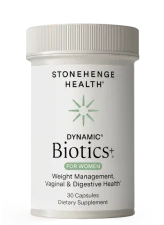
#1. Stonehenge Health Dynamic Biotics+ For Women

Stonehenge Health
A+Overall Grade

#1. Stonehenge Health Dynamic Biotics+ For Women

  • OVERALL RATING9.7/10
  • Predicted Effectiveness9.8/10
  • Ingredient Quality9.7/10
  • Value9.5/10
  • Return Policy9.8/10
  • User Rating9.7/10
PROS
  • 24 diverse probiotic strains

  • 70 billion CFUs

  • Includes L. rhamnosus, L. acidophilus, B. lactis B420 and L. gasseri

  • Includes prebiotic NutraFlora®

  • Includes additional ingredients selected for women's health

  • Delayed-release vegetarian capsules

  • Aptar CSP packaging technology

  • Non-GMO, vegan, gluten- and soy-free

  • 90-day money-back guarantee

  • Manufactured in USA

CONS
  • Often out of stock due to high demand

Why We Chose It

Stonehenge Health Dynamic Biotics+ For Women is our top choice for women over 50.

What immediately stood out to us was the combination of 24 probiotic strains and 70 billion CFUs, including four strains particularly relevant to our women's-health criteria: L. rhamnosus HN001™, L. acidophilus La-14™, Bifidobacterium animalis subsp. lactis B420™ and L. gasseri.

That broad formulation is particularly appealing for women entering or moving beyond menopause, when the microbiome is changing alongside declining estrogen levels.1,2

We also liked the addition of NutraFlora® prebiotic fiber, which provides a food source for beneficial bacteria.

Rather than positioning probiotics as a cure for menopause, we believe the better approach is to provide daily microbiome support alongside the other foundations of healthy aging.

Dynamic Biotics+ For Women does that with a combination of probiotic diversity, prebiotic support, and additional ingredients selected specifically for women's needs.

The formula also uses delayed-release capsules and moisture-protective packaging designed to help protect the probiotic cultures.

For women 50 and over who want one comprehensive daily probiotic, this is the formula that stood out to us most.

*Results are based on user-generated experiences with these products, and individual results may vary. Please refer to the manufacturer’s product website for detailed information.

#2. Garden of Life Once Daily Women's Probiotics

Garden of Life Once Daily Women's Probiotics
A-Overall Grade

#2. Garden of Life Once Daily Women's Probiotics

  • OVERALL RATING8.7/10
  • Predicted Effectiveness9.1/10
  • Ingredient Quality8.8/10
  • Value8.2/10
  • Return Policy8.8/10
  • User Rating8.6/10
PROS
  • 16 Diverse Probiotic Strains

  • 50 Billion CFUs

  • Includes L. rhamnosus, L. acidophilus, bifidobacterium lactis and L. gasseri

  • Once-daily capsule

  • Vegetarian capsules

  • Non-GMO

  • Dairy- and soy-free

CONS
  • Does not contain B. lactis B420

  • No dedicated prebiotic blend

  • Does not include additional ingredients specifically selected for women over 50

Why We Chose It

Garden of Life's Once Daily Women's Probiotics provides a solid combination of probiotic diversity and potency.

We especially liked that it includes the four probiotic groups we prioritized in our research: L. rhamnosus, L. acidophilus, B. lactis and L. gasseri.

However, it doesn't provide the same level of formulation specificity as our #1 pick. It lacks B. lactis B420 and doesn't include the additional prebiotic and women's-health ingredients found in Dynamic Biotics+ For Women.

*Results are based on user-generated experiences with these products, and individual results may vary. Please refer to the manufacturer’s product website for detailed information.

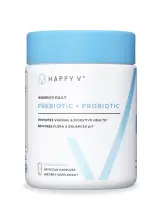
#3. Happy V Women's Daily Prebiotic + Probiotic

Happy V Women's Daily Prebiotic + Probiotic
B-Overall Grade

#3. Happy V Women's Daily Prebiotic + Probiotic

  • OVERALL RATING7.6/10
  • Predicted Effectiveness8.8/10
  • Ingredient Quality8.3/10
  • Value6.8/10
  • Return Policy6.1/10
  • User Rating7.8/10
PROS
  • Includes L. rhamnosus, L. acidophilus, bifidobacterium lactis, and L. gasseri

  • Includes a prebiotic

  • Delayed-release Veggie capsules

  • Non-GMO

  • Gluten- and dairy-free

CONS
  • Only 7 probiotic strains

  • 20 Billion CFUs

  • No additional ingredients specifically targeted toward healthy aging

  • Two capsules per day

Why We Chose It

Happy V Women's Daily Prebiotic + Probiotic caught our attention because it combines probiotics with a prebiotic and includes all four of the probiotic groups we prioritized.

However, the formula contains considerably fewer strains and fewer CFUs than our top selections.

For women over 50 looking for a more comprehensive microbiome formula, we prefer greater strain diversity and a broader formulation designed around the changes associated with menopause and healthy aging.

*Results are based on user-generated experiences with these products, and individual results may vary. Please refer to the manufacturer’s product website for detailed information.

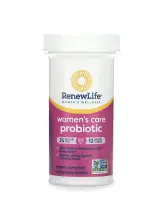
#4. Renew Life Women's Care Probiotic

Renew Life Women's Care Probiotic
C+Overall Grade

#4. Renew Life Women's Care Probiotic

  • OVERALL RATING7.2/10
  • Predicted Effectiveness6.7/10
  • Ingredient Quality7.1/10
  • Value6.6/10
  • Return Policy8.8/10
  • User Rating6.8/10
PROS
  • Includes L. rhamnosus, L. acidophilus, and B. lactis

  • 12 probiotic strains

  • 25 billion CFUs

  • Delayed-release capsules

  • Non-GMO

  • Dairy- and soy-free

  • Amber glass bottle

CONS
  • Does not include L. gasseri

  • 12 strains

  • 25 billion CFUs

  • No prebiotic

  • No additional ingredients specifically targeted toward women over 50

Why We Chose It

Renew Life Women's Care Probiotic includes three of the four probiotic groups we prioritized.

We also liked its delayed-release capsule and amber-glass packaging.

However, compared with our top selections, it provides fewer strains and a lower CFU count. It also doesn't include a prebiotic or additional ingredients specifically chosen to address the broader needs of women in midlife and beyond.

*Results are based on user-generated experiences with these products, and individual results may vary. Please refer to the manufacturer’s product website for detailed information.

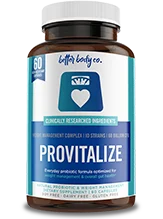
#5. Provitalize

Provitalize
DOverall Grade

#5. Provitalize

  • OVERALL RATING6.7/10
  • Predicted Effectiveness6.5/10
  • Ingredient Quality7.2/10
  • Value6.2/10
  • Return Policy7.5/10
  • User Rating6.2/10
PROS
  • High CFU Count

  • Includes L. gasseri and Bifidobacterium lactis

  • Delayed-Release Capsules

  • Soy-, dairy- and gluten-free

CONS
  • Limited strain diversity

  • Does not include L. rhamnosus or L. acidophilus

  • No prebiotic

  • Does not contain Prebiotics

  • Two capsules per day

  • Limited breadth of wwomen's-health ingredients

Why We Chose It

Provitalize has built a strong following among women interested in probiotics during menopause.

We liked its high CFU count and inclusion of L. gasseri and B. lactis.

However, our research led us to favor formulas with greater strain diversity and all four of our priority probiotic groups.

For women over 50 who want broader microbiome support, we believe the other formulas on our list offer a more comprehensive approach.

*Results are based on user-generated experiences with these products, and individual results may vary. Please refer to the manufacturer’s product website for detailed information.
Citations
  1. Liaquat M, et al. “The gut microbiota in menopause: Is there a role for prebiotic and probiotic solutions?” 2025. https://pubmed.ncbi.nlm.nih.gov/40335047/
  2. Muhleisen AL, Herbst-Kralovetz MM. “Menopause and the vaginal microbiome.” https://pubmed.ncbi.nlm.nih.gov/35983178/
  3. Bradley E, Haran J. “The human gut microbiome and aging.” 2024. https://pubmed.ncbi.nlm.nih.gov/38831607/
  4. Chen LA, Boyle K. “The Role of the Gut Microbiome in Health and Disease in the Elderly.” 2024. https://pubmed.ncbi.nlm.nih.gov/38642272/
  5. Tsuboi I, et al. “Effect of Lactobacillus-based probiotics on genitourinary syndrome of menopause in post-menopausal women: A systematic review.” 2026. https://pubmed.ncbi.nlm.nih.gov/41903368/
  6. Hibberd AA, et al. “Probiotic or synbiotic alters the gut microbiota and metabolism in a randomised controlled trial of weight management in overweight adults.” 2019. https://pubmed.ncbi.nlm.nih.gov/30525950/
  7. Tomlinson H, et al. “Investigating the effects of probiotics during the menopause transition: A systematic review & meta-analysis.” 2025. https://pubmed.ncbi.nlm.nih.gov/40639456/
  8. Reid G, et al. “Oral use of Lactobacillus rhamnosus GR-1 and L. fermentum RC-14 significantly alters vaginal flora.” https://pubmed.ncbi.nlm.nih.gov/12628548/
  9. Sikora M, et al. “Effects of daily probiotic supplementation with Lactobacillus acidophilus on calcium status, bone metabolism biomarkers, and bone mineral density in postmenopausal women.” 2024. https://pubmed.ncbi.nlm.nih.gov/39010860/
  10. Kadooka Y, et al. “Regulation of abdominal adiposity by probiotics (Lactobacillus gasseri SBT2055) in adults with obese tendencies.” https://pubmed.ncbi.nlm.nih.gov/20216555/